Astronomy Camp at AIS 2011

Well, this is the first blog post that I'm publishing after 2 months. I'm really sorry about the absence of updates and news as i was really busy with University academics and AIESEC work. This post is about the Astronomy camp that we conducted for the Asian International School (AIS) last 18th of March

Astronomy Camp - March 2011 at University of Colombo

I'm now gonna blog about an event that we had in our University almost 2 months back. I'm really sorry guys for dragging this such longer due to the busy schedule I've been undergoing last few months due to various reasons. Hope you don't mind me sharing in so late. Anyway here it is...

Watch Total Solar Eclipse 11th July 2010 Live Streaming from EclipseBlog

The most awaited total solar eclipse of the year 2010 is about to take place in less than next 20 hours from now. There have been a lot of groups/ individuals flocked at South Pacific islands and Chilean territories right now waiting for the eclipse to take place.

IYA2009 Commemorative Coins Issued by Many Countries Worldwide

As the title of this post hints, there were lot of countries involved in this worldwide celebration during 2009, which was the 400th anniversary of both the discovery of telescope for astronomical observation by Galileo Galilei and the publication of “Astronomia Nova” by Johannes Kepler. These were the reasons which were prominent in specifying 2009 as the IYA.

A Tribute to Fiami the author of The Lives of Galileo

I have already made a post about Fiami, and his great gift that I received during the Christmas season. I got many great feedback on that and even my friends wanted to read it, as none of them had the comic book with them, So I thought of doing a youtube video featuring Fiami

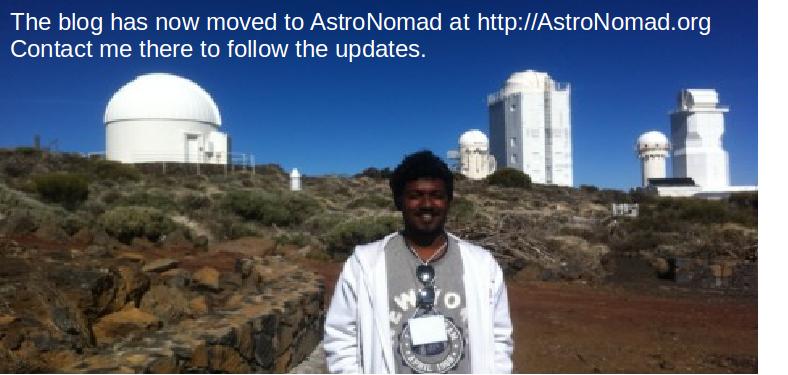
The Blog Has Moved !

Sunday, July 19, 2009

Physics Olympiad & Astronomy and Astrophysics Olympiads concluded successfully

With a good preparation for the Olympiads, I had also applied for the both Olympiads this year. Since the both Olympiads were scheduled to be held on the 18th July, yesterday I went to the premises of the Physics Department of the University of Colombo.

This year there was a considerable participation for the Physics Olympiad. And I was very glad at that. The Physics Olympiad was started at 9:10 am local time after the introduction by the chief examiner, who was Dr. S R D Rosa.

Speaking about the Olympiad, I have to tell that the 2-hour paper was easier than expected. As per my experience last year, ( I sat for the Physics Olympiad in 2008 prior to my Advanced Level Exams) this year's paper was easy to deal with. There were 20 MCQs as usual together the 2 semi-structured questions. However I managed to answer them well as far as I'm concerned and I think most of the students also did, as per their body language at in the end of the Olympiad.

As soon as the Physics Olympiad was over, the Astronomy and Astrophysics exam started at about 11:30 am. Professor Chandana Jayaratne was conducting that and it also went fine. In this IYA 2009 this was the 3rd Astronomy & Astrophysics Olympiad that Sri Lanka held. However, as per the resources I received there had been a huge drawback of participation from the students, the overall number of candidates, sitting for the Olympiad being just 65, island wide.Physics Olympiad & Astronomy and Astrophysics Olympiads concluded successfully

If I talk about the Olympiad paper, I have to mention that the 20 MCQs were more innovative had left something think over for the candidate. The 5 Essay Questions we based on general facts of astronomy & Astrophysics in general. The exam was over at 1.00 pm after the Olympiad session of 1.5 hours was over.

It should be highlighted that Professor Chandana Jayaratne said in the end that there would be astronomy lessons included in the local Advanced Level syllabus, starting from the 2010, so that there could be a wider participation, next time. I'm also looking forward for that to happen ASAP.

Wednesday, July 15, 2009

A Guide for Astronomy & Astrophysics Olympiad 2009 (Part 2)

A Guide for Astronomy & Astrophysics Olympiad 2009 (Part 2)
In this blog post I'll provide you guys the rest of the questions of the Astronomy and Astrophysics Olympiad as continued from the previous post at http://iya2009sl.blogspot.com/2009/07/guide-for-astronomy-astrophysics.html This will feature the second segment of the questions. As I have told you earlier, please don't hesitate to put a PM and get any explanation, answer known.

11. The brightest star of the Scorpion constellation is

a) Sirius b) Regulus c) Antares d) Polaris

12. There a two stars A and B with apparent magnitudes 1 and 3, respectively. The correct
expression about their apparent brightness is

a). Star A is 6 times brighter than the star B.
b). Star A is 6 times fainter than the star B.
c). Star A is 6.310 times brighter than the star B.
d). Star A is 2.512 times brighter than the star B.

13. The weight of a man on Earth’s surface is 60 kg. If he goes to the planet Mars, his weight at the Martian surface would be

a) 20 kg b) 10 kg c) 60 kg d) 120 kg

14. The escape velocity (V) of an object (at its surface) depends on its mass (M) and radius (R), and is given by V2 = (2GM/R). (Here, universal gravitational constant G = 6.67 x 10⁻¹¹ m3 kg-1 s-2). Suppose a star with a escape velocity of 1800 km s-1 subsequently becomes a neutron star
having a radius 105 times smaller than the original star, the escape velocity of the neutron star
would be (V2 = V Squared)

a) 200,000 km s-1 b) 180,000 km s-1 c) 180,000 m s-1 d) 569210 km s-1

15. An observer who is on the 150 northern latitude observed a star in the Ursa Minor constellation at 9.00 p.m. local time. The star has 250 angular separations with bottom star of the pointer stars of the Ursa Major constellation. What would be the altitude of the observed star after a time lapse of 3 hours.

a) 37.50 b) 120 c) 250 d) 150

16. A comet orbiting around the Sun has a perihelion distance of 2.0 A.U. and an aphelion distance of 6.0 A.U. Eccentricity (e) of its elliptical orbit is

a) 0.4 b) 0.5 c) 0.7 d) 1.0.

17. Using the Kepler’s third law compute the period of an asteroid orbiting around the Sun having a semi-major axis of 4.0 AU (astronomical Units). The answer in Earth years is

a) 3 b) 4 c) 8 d) 76

18. If the orbital speed of earth as 30 km/s and distance between the Earth and the Sun as 1.5 x 10 11th power m, the mass of the Sun would be (Useful information: Universal gravitational constant G = 6.67 x 10⁻¹¹ m3 kg-1 s-2).

a) 1.9 x 10 30 kg, b) 2.0 x 10 30 kg, c) 2.1 x 10 30 kg, d) Non of the above answers are correct.

19. If the focal length of the objective of a telescope is 1 m and the focal length of its eye piece is
10 mm, the magnification of the telescope is

a) 10 b) 100 c) 200 d) 1000.

20. A star gives a parallax of 0.29” when observed from the earth with a time gap of 6 months. The distance to that star in light years is

a) 3.26 b) 5.62 c) 11.24 d) 22.48.

Tuesday, July 14, 2009

A Guide for Astronomy & Astrophysics Olympiad 2009 (Part 1)

A Guide for Astronomy & Astrophysics Olympiad 2009 (Part 1)
Today, I'm gonna provide you with some supplement for the Astronomy & Astrophysics Olympiad 2009, to be held on 18th of July 2009 at island wide locations. In fact I'm providing you with this past paper of Astronomy & Astrophysics Olympiad held in 2007. I think this could be a highly valued learning resource for those who are in need and taking part at the national and international level competitions. Please go through these questions and let me know how you feel. Don't hesitate to contact me if you have an inquiry whatsoever, related to these questions.

1. Solar atmosphere can be divided into three major parts based on temperature. They are
photosphere, chromosphere and corona. The most suitable answer for the average temperature
of the corona is

a) 6000 K b) 10000 K c) above 100000 K d) 3500 K

2. The sidereal day is 3 minutes and 56 seconds less than a solar day. This time difference is due to
a) Earth’s rotation
b) Sun’s rotation
c) Sun’s motion around the galactic center
d) Earth’s revolution around the Sun

3. The Polaris will not always be the North star due to

a) The sidereal day being shorter than the solar day
b) Due to the precession of the Earth’s axis.
c) The Earth's period being slightly longer than 365 days.
d) The Solar wind blowing the Earth away from the sun.

4. An observer standing 30o north from equator observes a star at zenith (right above the head). If the observer moves along the same longitude, 90o to the south from where he is, what could be the new altitude of the star?

a) 0o b) 30o c) 60o d) 90o

5. Red shift of the spectral lines show the distance galaxies are moving away from us. A spectrum of certain galaxy is observed in the H alpha region and found wavelength of H alpha absorption line is 6564.64 Armstrong. If the laboratory wavelength H alpha is 6563 Armstrong and the speed of light (C) is 300,000 km s-1 find the receding speed of
the galaxy.

a) 35 km s-1 b) 50 km s-1 c) 65 km s-1 d) 75 km s-1

6. The different bands of electromagnetic radiation consist of little packets of energy, called
photons traveling through space. The amount of energy this packet possess is directly
proportionate to their frequency. Find energy of such electromagnetic wave which has the
wavelength of 5000A (5x10⁻⁷ m). The speed of light 3x10⁸ m s-1 and Plank constant
6.625x10⁻³⁴ J s .

a) 39.75x1038 J b) 39.75x10⁻²⁰ J c) 39.75x10⁻²⁰ J s d) 30.34x1030 J s

7. The hydrogen in interstellar medium is generally quite cold (if it is not in the vicinity of warm
stars) and found in its atomic or neutral ground state. Such clouds are called HI regions. Cold
interstellar hydrogen emits radiation in radio region at the wavelength of

a) 26 cm b) 21 cm c) 5910 A0 d) 1000 nm

8. The term “Hot Jupiters” is a commonly used word among the planetary scientists in the world. This explains

a) The Jupiter formed much closed to the Sun few billions years ago.
b) Volcanic eruptions heat up the Jupiter’s surface.
c) Discovered some Jupiter size extra-solar planets are closer to the parent star than the
distance between the Sun and Jupiter.
d) The Jupiter becomes a star in the future.

9. Stars are born, evolve and die. The primary mass of the star decides the way it destroys. A star which is comparable to the Sun’s mass destroys as

a) Supernovae b) Novae c) Planetary nebulae d) X-ray burst

10. A, B, and C are three stars with temperatures of 6000K, 24000K, and 3500K, respectively.
What is the possible color sequence of those stars A, B and C, respectively.

a) Yellowish, Bluish, Reddish b) Reddish, Bluish, Yellowish
c) Bluish, Yellowish, Reddish d) Yellowish, Reddish, Bluish

The rest of the questions are continued here http://iya2009sl.blogspot.com/2009/07/guide-for-astronomy-astrophysics_15.html

Monday, July 13, 2009

IYA 2009 Astronomy Lecture on The Doppler Effect and Expansion of the Universe at Anula Vidyalaya, Nugegoda

IYA 2009 Astronomy Lecture on The Doppler Effect and Expansion of the Universe at Anula Vidyalaya, Nugegoda
Last Friday I was invited to deliver a lecture at Anula Vidyalaya, Nugegoda. (Nugegoda is a suburb of capital Colombo located 20-minute drive away from Colombo). Normally the Astronomical Association of Anula Vidyalaya holds their weekly lectures on Fridays. There are 2 basic lecture scenarios dedicated for both junior and senior students.

I think you guys are still aware of my fellow amateur astronomer Pulasthi Kanattage, who is also an astronomy lecturer. Usually it's him who lectures at Anula. However, as he had to go to Kandy for another astronomy project, I had to take care of his responsibility at Anula on that specific day (10th July 2009)

As lectures are usually started at 1.45 pm (In Sri Lanka schools open at 7.30 a.m. and close at 1.30 p.m.) I arrived at the school at 1.30 in the afternoon. Then I was accompanied to the lecture hall by a senior member of the Astronomical Association. I had earlier informed the board officials about the topic I would be lecturing. I hoped and had prepared to deliver a lecture on "Doppler Effect & Expansion of the Universe" as I had been told that I would get an audience where majority would be Advanced Level students (*Grades 12, 13). Unexpectedly I had to adjust to the situation as the audience was comprised of girls from Grade 8 onwards to Grade 12. Therefore I didn't go that advanced on the lectures explaining the analytical applications of Doppler Effect. Instead I showed them how to derive the Doppler Equations depending on the movements of the source and the observer. Also I explained how the expansion of the universe was proved true with the application of Doppler Effect resulting in a Red Shift. I also discussed the related topics including the introduction of Einstein's cosmological constant and Hubble's law which is

V=Hd
where,

V= Apparent Velocity
H= Proportionality constant / Hubble constant
d=Distance to the galaxy from the Earth


I conducted the lecture till 2.50 p.m. and was glad in the end answering the random questions arisen, which proved that the girls have added something from the lecture to their knowledge.
I really enjoyed the lecture and an bit disappointed that I am unable to upload the pictures as I didn't have a camera at the time of lecturing. Don't worry, next time I surely will buy a new camera and let you guys witness the pictures and perhaps some videos too.

Thursday, July 9, 2009

Astronomy & Astrophysics Olympiad National Competition Underway

I feel it's great that we can have our students studied and concerned more on astronomy in this year of astronomy ( IYA 2009). The UNESCO proclaimed year will likely be more highlighted with the performances of students at the 3rd International Astronomy & Astrophysics Olympiad, to be held in next October in Iran. (May the conditions be good for everyone in Iran by October 2009)

This blog post is about the readiness of Sri Lanka's team to tale part at the latter. We will first discuss basically and go deep soon into the topic.

Well, the last 30th (June) marked the deadline for the applications for the 2nd National Astronomy & Astrophysics Olympiad in Sri Lanka. I hope many of you guys have already applied though this post was late on my blog. The National Olympiad Competition is scheduled to be held on next 18th Saturday lasting for 2 hours from 11.00 am to 1.00 pm. Competition will be conducted on following Universities of Sri Lanka trilingually featuring Sinhalese, English & Tamil.Astronomy & Astrophysics Olympiad National Competition Underway

  • University of Colombo
  • University of Perdeniya
  • University of Kelaniya
  • University of Ruhuna
  • University of Batticoala
  • University of Jaffna
The National Olympiads are conducted jointly by the Department of Examinations and Physics Department of University of Colombo.

Winners will be awarded with medallions and certificates whereas the top 5 scorers will be selected and trained extensively on Astronomy & Astrophysics to tale part at the international event.

I wish all you guys the very best in the contest....
Stay tuned with more news & updates with IYA 2009 Astronomy Sri Lanka